
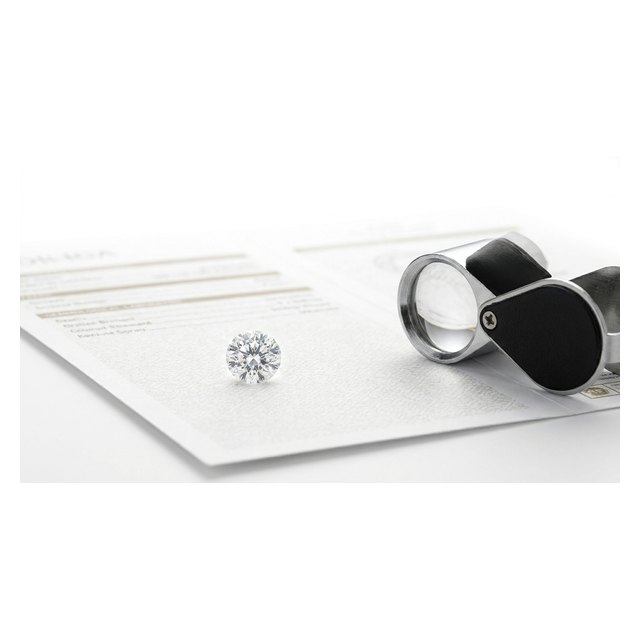
A gem certificate (more strictly, a lab report or dossier) is a laboratory’s record of what a stone is and what has been done to it. It is not an appraisal — it states no retail value — and it is only as good as the lab that issued it. Reputable laboratories include GIA, Gübelin, SSEF, IGI, HRD and AGS, several with Asia-Pacific offices.
The lines that matter
Identity — the species and variety (natural sapphire, not just “sapphire”; laboratory-grown where applicable). Treatments — usually under comments: “no indications of heating” means untreated, and that phrase alone can multiply value; “heated”, “glass-filled” or “diffusion” each change the price band. Measurements and weight — dimensions in millimetres and carat weight, which together with the cut reveal proportions. Origin — some labs state geographic origin where the evidence supports it; it is opinion-grade and prized by collectors.
Reading between the lines
Comments carry the real story: phrases like “minor” clarity characteristics, “faint” colour zones or “pits on the table” describe what the grader saw. Two certificates with the same headline grades can describe noticeably different stones. Match the report to the stone: every report number can be checked online at the issuing lab, and the measurements must match your stone exactly.
Learning the system
Certificates, disclosure rules and treatment vocabulary are part of trade knowledge — covered in the gem and jewellery trade course at JDMIS, with the laboratory side of testing explained in how to get gemstones tested.
Frequently asked questions
Is a gem certificate the same as an appraisal?
No. A certificate - more strictly a lab report or dossier - is a laboratory's record of what a stone is and what has been done to it. It states no retail value and is only as good as the lab that issued it.
What certificate lines matter most?
Identity (species and variety, natural or laboratory-grown), treatments under comments - 'no indications of heating' alone can multiply value - plus measurements, carat weight and, where stated, origin. Comments carry the real story: two certificates with the same headline grades can describe noticeably different stones.
Can I verify a gem certificate online?
Yes - every report number can be checked at the issuing laboratory's website, and the measurements on the report must match your stone exactly.
Explore further: play Name That Gem, a free gem-identification game, or trace gems to their sources on the Gem Globe.
Going deeper: these are bench skills you can learn properly - the gemmology foundation course and the gem identification methods certificate teach identification with real stones and instruments.
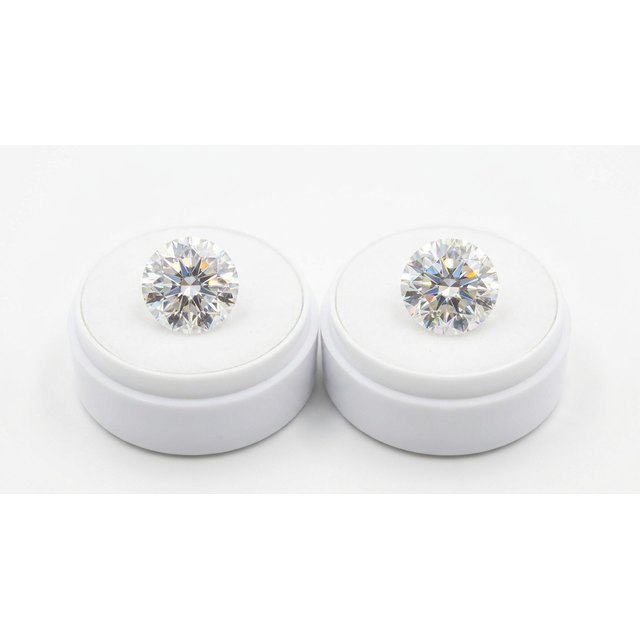
Moissanite is the best-known diamond simulant of the current era, and the two are easily confused by eye — which is exactly why testers exist. The differences that matter are physical, visual and financial.
Origin and substance
Diamond is native carbon crystallised deep in the earth (or grown in a laboratory). Moissanite is silicon carbide — natural crystals are so rare that jewellery moissanite is essentially always laboratory-created. It is a distinct material, not a fake diamond any more than a ruby is a fake sapphire; both are gems, one simply carries the heritage and scarcity premium.
Hardness, fire and look
Diamond is the hardest natural material (10 on the Mohs scale); moissanite follows at about 9.25 — both stand up to daily wear. Visually, moissanite has higher dispersion, so it throws more coloured fire, especially in larger sizes; diamond’s appeal is its balance of brilliance and white sparkle. To most casual eyes the difference reads as “very sparkly” versus “classic”, and lighting decides who notices what.
Price and testing
A moissanite of the same apparent size costs a small fraction of a diamond of similar quality — the honest reason for its popularity. Thermal diamond testers, the shop standard, can be fooled by moissanite’s thermal conductivity; proper separation needs electrical-conductivity testing or professional instruments. For the trade-side view of simulants and synthetics — including the tester discussion with Presidium — see what tools gemmologists use; the material science is part of gem identification training at JDMIS.
Frequently asked questions
What is moissanite?
Silicon carbide - a distinct gem material, not a fake diamond. Natural crystals are so rare that jewellery moissanite is essentially always laboratory-created.
Can a diamond tester detect moissanite?
Not reliably. Thermal diamond testers, the shop standard, can be fooled by moissanite's thermal conductivity; proper separation needs electrical-conductivity testing or professional instruments.
Why does moissanite cost less than diamond?
It is laboratory-created at scale, so a moissanite of the same apparent size costs a small fraction of a diamond of similar quality - the honest reason for its popularity. Diamond carries the heritage and scarcity premium.
Explore further: play Name That Gem, a free gem-identification game, or trace gems to their sources on the Gem Globe.
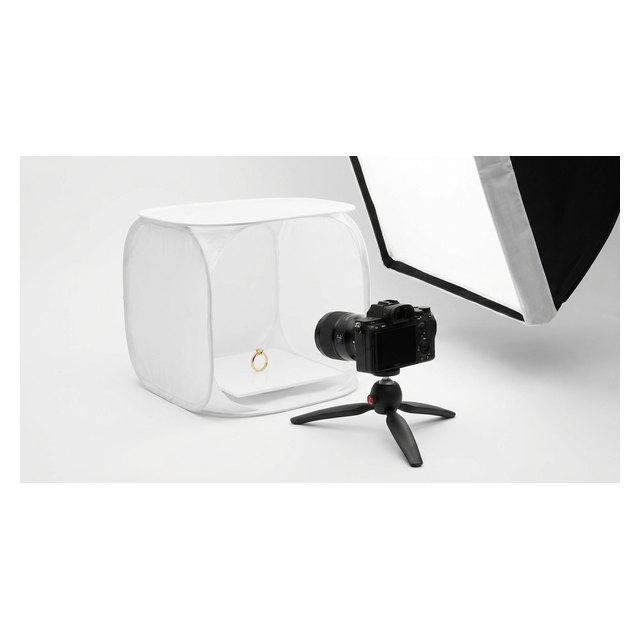
Online, your photographs are the product. A well-made piece shot badly reads as a badly made piece, and the habits that fix this are simple enough for any maker to apply.
Light first
Jewellery is small, reflective and often faceted — three properties that punish bad light. Diffused, consistent light from two directions kills hard reflections on polished metal; a single hard light creates blown highlights that hide the very surfaces you polished. Daylight from a window with a thin white curtain is an honest starting setup; light tents and LED panels make it repeatable.
Focus and stability
At macro distances the depth of field is millimetres thin. Use a tripod or a brace, focus manually on the stone or the focal detail, and stop down for a little more depth. One perfectly sharp photo of the key detail outperforms ten soft overall shots.
Backgrounds, scale and honesty
Clean neutral backgrounds make colour and sparkle legible; a hand, wrist or neckline adds scale and desire. Shoot the same set of angles every time — front, side, on-body, detail, packaging — so your catalogue looks intentional and returns drop. Show flaws honestly in at least one frame: online buyers return what arrives as a surprise.
Going further
Lighting for metals and gems, styling and workflow are taught in the digital jewellery photography course at JDMIS — built for jewellers, not photographers — and the marketing side of using the images sits in the jewellery business curriculum at JDMIS.
Frequently asked questions
What lighting works best for photographing jewellery?
Diffused, consistent light from two directions. Jewellery is small, reflective and often faceted, so a single hard light creates blown highlights; diffused light from both sides kills hard reflections on polished metal. A window with a thin white curtain is an honest starting setup.
Why use a tripod for jewellery photography?
At macro distances the depth of field is only millimetres thin. A tripod or brace plus manual focus on the stone or focal detail delivers one perfectly sharp photo of the key detail, which outperforms ten soft overall shots.
What angles should I shoot for an online jewellery catalogue?
The same set every time - front, side, on-body, detail and packaging - so the catalogue looks intentional. Show at least one frame with the flaw visible: online buyers return what arrives as a surprise.
Explore further: find your Artisan Archetype in JDMIS’s visual quiz, or get an AI-guided course consultation.
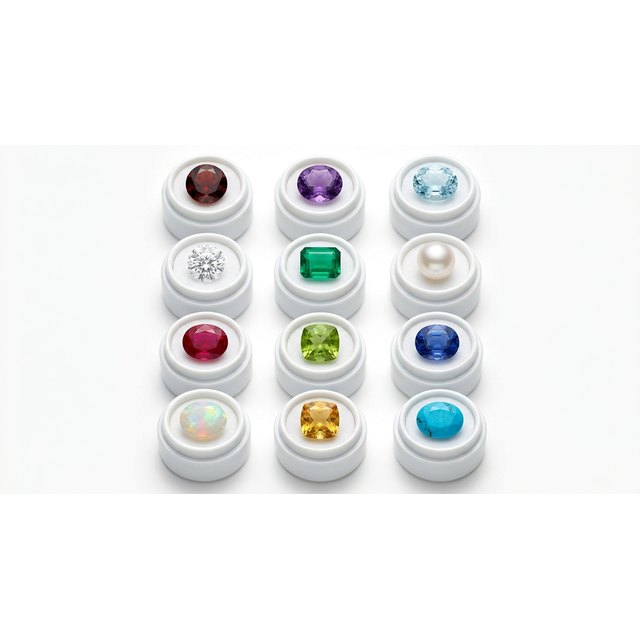
The birthstone tradition links one gem to each month, wearing “your” stone supposedly bringing luck or health. The modern list most jewellers use was standardised in 1912 by the American National Association of Jewelers and has been adjusted a few times since — which is why you will sometimes meet two stones competing for one month.
The modern list
January garnet · February amethyst · March aquamarine (bloodstone traditionally) · April diamond · May emerald · June pearl, moonstone or alexandrite · July ruby · August peridot (spinel added later) · September sapphire · October opal or tourmaline · November topaz or citrine · December turquoise, zircon or tanzanite.
Where it came from
The chain runs from the twelve stones of the High Priest’s breastplate in the Book of Exodus, through medieval associations of stones with months and zodiac signs, into Victorian sentimental jewellery and finally the trade standardisation of 1912. That history is why the list mixes precious gems (diamond, ruby, sapphire, emerald) with organics (pearl) and semi-precious material (garnet, amethyst) — it was never ranked by value.
Why jewellers like it
Birthstones give customers a personal, low-anxiety entry into gem buying: the choice is made for you, every budget has an option, and the gift story writes itself. The materials themselves — pearls, opals, the coloured stones — are covered in the gem-trade curriculum at JDMIS; see the gem and jewellery trade programme or browse the jewellery blog for individual stone stories.
Frequently asked questions
What is the modern birthstone list?
January garnet, February amethyst, March aquamarine, April diamond, May emerald, June pearl or moonstone or alexandrite, July ruby, August peridot, September sapphire, October opal or tourmaline, November topaz or citrine, December turquoise, zircon or tanzanite.
Where does the birthstone tradition come from?
The chain runs from the twelve stones of the High Priest's breastplate in the Book of Exodus, through medieval associations of stones with months and zodiac signs, into Victorian sentimental jewellery, ending in the trade standardisation of 1912 by the American National Association of Jewelers.
Why do some months have two or three birthstones?
Because the 1912 list has been adjusted several times since, and some months kept both the traditional and the added stone - March kept bloodstone alongside aquamarine, August gained spinel, and December carries turquoise, zircon and tanzanite.
Explore further: play Name That Gem, a free gem-identification game, or trace gems to their sources on the Gem Globe.
Visual reference

Computer-aided design (CAD) has become a standard tool in the jewellery trade, sitting alongside — not replacing — hand drawing and bench skills. A jewellery CAD model is a precise three-dimensional object: every wall thickness, stone seat and prong is modelled to real dimensions, and the file can be checked, priced, revised and sent straight to a growing machine for casting.
What CAD changes
Hand drawing communicates a design; CAD specifies it. Because the model carries true measurements, it answers manufacturing questions before any metal is cut — how much the piece will weigh, whether a stone sits at the right depth, whether a wall will survive wear. For client work, a rendered image of the CAD model lets a customer approve a one-off commission before it exists.
Who uses it
Manufacturing jewellers use CAD for production lines and custom work; independent designers use it to offer bespoke pieces without maintaining a full workshop; and repairers use it to recreate missing parts such as a broken filigree gallery. Most working designers today pair CAD literacy with hand-drawing fluency, using each where it fits.
How the skills connect
CAD output normally enters production through lost-wax casting: the model is printed in resin or cast in wax, then invested and burned out for metal. A designer who understands both sides — the digital modelling and the casting process — designs pieces that survive manufacture. At JDMIS the CAD track runs from DD100 fundamentals through advanced modelling, alongside the hand design drawing and metalsmithing courses, so students learn the whole chain.
Frequently asked questions
What is jewellery CAD design?
Computer-aided design for jewellery is a precise three-dimensional model of a piece: every wall thickness, stone seat and prong is modelled to real dimensions, and the file can be checked, priced, revised and sent to a growing machine for casting.
Does CAD replace hand drawing for jewellers?
No - the two sit alongside each other. Hand drawing communicates a design; CAD specifies it with true measurements, answering manufacturing questions such as weight, stone depth and wall durability before any metal is cut.
How does a CAD model become a real piece of jewellery?
Through lost-wax casting: the model is printed in resin or cast in wax, invested, burned out and cast in metal. Designers who understand both the digital modelling and the casting process design pieces that survive manufacture.
Explore further: find your Artisan Archetype in JDMIS’s visual quiz, or get an AI-guided course consultation.
Try it digitally: sketch-to-render AI jewellery design is available free to try at BijouVision, our AI design tool.
Visual reference