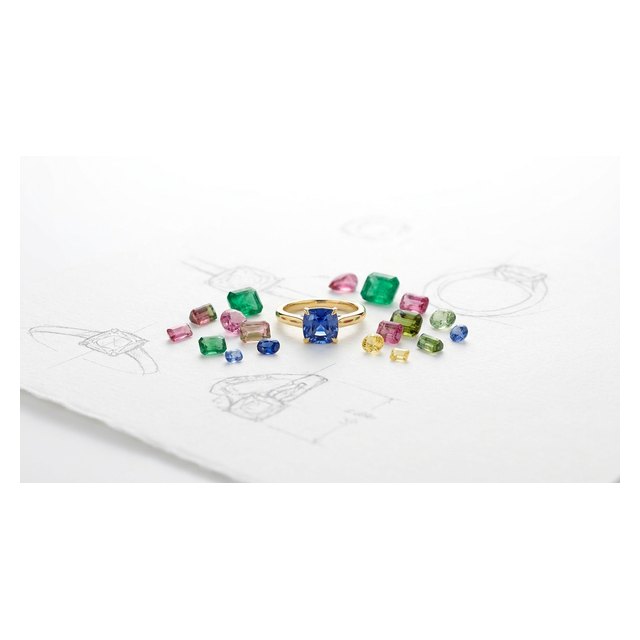
Sometimes a customer arrives not with an idea but with a stone: a loose gem to be set, or heirloom jewellery to be updated into a modern style. Designing around real gems and real measurements is a distinct skill — the design must fit the stone, not the other way round.
Why real stones change the workflow
A catalogued centre stone comes with known dimensions; a family heirloom often does not. The designer measures the actual stone, records its dimensions and estimated weight, and designs the setting around those numbers. Proportions, prong placement and even the overall silhouette of the piece follow from the measurements, which is why precision drawing practice starts with the major forms and exact geometry.
Respecting the stone’s history and value
Heirloom redesign carries responsibility: the stone may carry sentimental value far above its market price. A designer working from real gems needs enough gem knowledge to ask the right questions — is the stone treated, how durable is it for the intended wear, what does the certificate say — territory covered alongside design in GT100 Gem & Jewellery Trade Secrets.
Learning bespoke design
The classical design pathway at JDMIS teaches this workflow directly: measurement and specification in JD200 technical drawing, client-ready presentation to close the commission, all inside the Fine Jewellery Design diploma pathway beginning with JD100 Creative Drawing.
Frequently asked questions
How does designing around a real gemstone differ?
The design must fit the stone, not the other way round. The designer measures the actual stone, records its dimensions and estimated weight, and designs proportions, prong placement and silhouette around those numbers.
What should a designer ask about an heirloom stone?
Whether the stone is treated, how durable it is for the intended wear, and what the certificate says - heirloom redesign carries responsibility because the stone may carry sentimental value far above its market price.
Explore further: play Name That Gem, a free gem-identification game, or trace gems to their sources on the Gem Globe.
Going deeper: these are bench skills you can learn properly - the gemmology foundation course and the gem identification methods certificate teach identification with real stones and instruments.
Visual reference