
An impressive sketch can close a sale; knowing how to sketch efficiently and effectively in front of a customer is an indispensable skill if you are serious in boosting your jewellery sales and conversion rate.

As a graduate of the JD100 you already know how to trace, sketch,and considering the elements and principles of design. Since the creative has been covered, this program will train you to focus on accurate and detailed draughts to avoid costly mistakes and guarantee your design is produced to exact customer specifications.
Preview video
Course outline

Technical Drawing Fundamentals

Intermediate Technical Drawing

Advanced Technical Drawing

Fast Effective Counter Sketching

Jewellery Cost Estimation
Sample lesson:
Course instructors
-

Tanja Sadow
Tanja is an award winning jewellery designer & gemmologist with more than 4 decades of experience educating the jewellery industry across 4 continents. Dean and founder of JDMIS, Tanja works with aspiring artisans as well as top jewellery brand team members to help them achieve brilliance in their careers. Read More

- 1
Student reviews
-

I think it gave me a lot of new ideas and more knowledge about how to be a good designer and use different tools and techniques.
- Isabela M. (Poland)
-
So far, I have used my skills to create an engagement ring for a friend.
- Denise A. (Singapore)
-
I will tell my friend about the conducive environment and generous knowledge-sharing and hands-on practices in school.
- Hwee Yee C. (Singapore)
-
I think it gave me a lot of new ideas and more knowledge about how to be a good designer and use different tools and techniques.
- Isabela M. (Poland)
-
Tanja is very experienced in the field and regularly updated on market/industry conditions, so JDMIS is a good way to gauge if you are deciding whether or not to enter the industry. There are tips for how to interact with a client based on experience is helpful and knowledge that is not that easily found elsewhere, I would be applying those!
- Pei Wen C. (Singapore)
-
Super practical sketching tips were given in JDMIS that weren't even taught when I did my art and design course in Lasalle.
- Calvin Z. (Singapore)
-
My favourite course is JD200 because I learned so much from the course from Tanja. This course has taught me the foundation to make my own designs and this is essential in creativity.
- Inna L. (Philippines)
-
My favourite course is JD200 because I absolutely love learning from Tanja! She is so clear with explaining how to do things, very easy to understand and has so much experience in the Jewellery world with so many relevant, interesting stories to illustrate her points... I feel confident and ready to be a Fine Jewellery Designer!
- Carys O. (Britain)
-
Tanja has been very patience and passionate in teaching and making us understand our subjects very well.
- Tracy T. (Singapore)

Duration & Training Modes
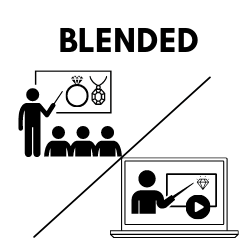
Duration: 3-5 weeks
Mode: Blended or E-Learning
All important theory and practical demonstrations will now be delivered through asynchronous (self-paced) online learning. This means that students go through most of the learning at their own pace and convenience via a comprehensive series of online videos and attend live interaction sessions (physical or online) afterwards to receive maximum support and guidance under expert instructors to reinforce the learning of key skills and concepts. For more information on different training modes, click here .
JDMIS also has flexible make-up schedules and graduates can return for free for refresher courses (subjected to availability).
-
Learning path

Design
This Professional Certification course is part of the Fine Jewellery Design specialisation. At the end of the programme, participants will have made several jewellery designs of their own.
Prerequisites: JD100 - Classical Jewellery Design 1: Creative Drawing and Essential Jewellery Knowledge.
Next Step (Traditional Jewellery Design Specialisation): JD300 - Classical Jewellery Design 3: Jewellery Illustration, Light and Colour.
Next Step (Complimentary Jewellery Design Specialisation): DD100 - Digital Jewellery Design 1: Fundamentals of Digital Jewellery Design (CAD).
Participants attending and completing this programme as a stand-alone certification can choose to enroll for the Fine Jewellery Design Diploma.
-
Tools and materials

Our course package provides you with everything required to efficiently complete your coursework. If you're joining us for JD200, prepare yourself for a special treat: a brand new course kit awaits you! This includes three fresh templates (two of which are designed exclusively for jewellery), an erasing shield, a white pigment pen, various types of paper, and all the course materials you'll need. And here's a pro tip: bring along your tools and materials from the JD100 course to complement your new JD200 toolkit. It's all about making your learning journey as seamless and enjoyable as possible!
*e-Learning students may opt out of purchasing the toolkit by letting our registrar know at the time of your registration.

- 1
Course Fee:
Invest in Your Creative Future
One payment. Lifetime access. No recurring fees.
Private Atelier Experience
30 hours exclusive in-studio training with Master Trainers
Available for corporate groups & private cohorts (min. 6 participants)
Self-Paced Essentials
Learn at your own pace
Guided Certification
Get certified with expert feedback
Classroom Immersive
Global Live Interactive
Maximum transformation
Add the Professional Toolkit
Everything you need to complete every project
Why Lifetime Access Changes Everything
See how different learning models compare
Monthly Subscriptions
Pay monthly to access. Stop paying = lose everything. Want to revisit in 2 years? Subscribe again.
Traditional Schools
Show up, hope you learn, go home. No recordings, no second chances. Miss a class? Miss it forever.
JDMIS Lifetime Access
Pay once, own forever. Revisit any module, any time, for life. Your content never expires.


Frequently asked questions:
-
What is the difference between the different Modes of Study +
The JDMIS Private Atelier Experience is most like a traditional workshop experience. Everything you do is in-person, in Singapore's most comprehensive jewellery training facility, with the support of a jewellery expert. There are readings and practice you can and should do at home, but your instructor is with you to deliver every piece of imporant information and support your learning throughout the learning activities and/or projects.
The JDMIS Classroom Immersive Experience less intense that the Atelier Experience. It provides the very best value balance between the full Atelier Experience and managing your training by yourself. All the relevant course content you will need to learn and refer to in the future is included online via the JDMIS learning management system. You have segments of the course you will be expected to review before each in-person experience session. When you come into class, your instructor will work with you to reinforce your learning with examples and projects that enhance your online learning. This option is generally considered to be the most desirable form of training for anyone who is based in Singapore or can visit Singapore.
The Self-paced Essentials is the exact opposite of the Private Atelier Experience. All the the same information - but completely self-paced. It is completely up to you to plan time to review and understand the course content, work on the learning activities and/or projects, and complete all of the requirements of the course. Nobody will chase you if you dont have time and need to postpone your progress, and you can always pick up again where you left off, or start again whenever you like. This option does not have any time limits, does not put any pressure on you to complete assignments, has no tests and does not include any validation of your work.
If you are thinking you would like to have a qualification to show your achievement, this requires that you connect with our expert team of trainers and have them review your work to validate your skill, and for you to complete a final examination to validate your knowledge and understanding. This is where the Guided Certification option adds value. It unlocks the project submission elements in the curriculum and JDMIS expert instructors will review and feedback on your work - providing valuable information on your progress and areas of improvement. You will also be able to complete a final examination online that, together with course submissions, registers your qualification in the JDMIS Professional Qualification Register, allowing you to share your achievement as a verifiable online certificate of website slider or badge.
The JDMIS Global Live Interactive option provides more support that the Guided Certification option via remote live learning sessions specifically for small groups of participants abroad, or unable to complete physical training sessions in Singapore. These training modes represent the highest level of support available to JDMIS global audience.
-
How will the schedules work? +
Online portions of your jewellery training will be delivered through exceptionally produced high-definition videon presentations, packaged in a micro-learning format, that you can view at your own pace and convenience.
Participants Private Atelier or Classroom Immersive training options will choose specific scheduled to follow as part of the admissions process. If you need to miss a session, please inform our registrar in advance so that they can coordinate a make-ul lesson for you.
For online live sessions such as Global Live Interactive lessons, weekly group office hours, and 1:1 assessment/review sessions, options are provided in multible time-zones to facilitate access to individuals with diverse work or family commitments.
-
What if I have questions during self-study? +
The learners from all live courses (Private Atelier, Classroom Immersive and Global Live Interactive) will receive access to an exclusive WhatsApp Group where you can get feedback from instructors and engage in discussions with your fellow students. This is an immediate channel where questions normally are attended during working hours by instructors, JDMIS team membbers or even fellow participants in your course.
Participants in the Guided Certification options can post questions to the community forum, in which JDMIS instructors and other participant are present and interact, but with lower frequency. Guided Certification participants also have access to weekly 'office hours' a 30-60 minute group session where course participants and graduates can join in to ask questions on a first-come-first-served basis within the scheduled session. You can also use your two 1:1 discussion sessions to review any questions you may have.
Self-study participants only have access to community channels. They may however upgrade at any time to other more comprehensive learning options.
-
How much time do I need to study a week? +
If you choose a self-paced course option, you conduct your study at your own pace that suits your learning style!
Guided certification options allow you to complete your validation steps within 6 months - allowing you to plan your training at your own pace.
For live sessions (in Singapore or abroad) you should plan for each course to involve at least 15 hours of online asynchronous commitment (self paced) 6 to 15 hours of scheduled live sessions, and approximately 10-20 hours of additional own-time practice.
-
Are the tools & materials included? +
The cost of tools and materials is already included in the course fee of Private Atelier and Classroom Immersive options. All participants in these sessions will receive the same tool kit ensuring they can complete their course efficiently.
Participants joining any of our other online learing options are eligible purchase the same toolkit by letting our registrar know at the time of your registration. Shipping costs apply both to local and international tool and material purchases. We can advice on these as part of the admissions process.
-
How will my assignment be graded and what do I need to pass? +
You are responsible for completing the online lessons before attending the live sessions with JDMIS instructors. If you are completing any certifiable variant of our courses, that course will have several milestone assignments which you need to complete and submit by specified deadlines in order for your instructors to review and provide feedback.
In order for your instructors to review your assignments and provide feedback, you need to take photos/scans of your completed work (design or jewellery piece) and submit them onto the JDMIS online assessment portal.
You need to obtain an average mark of 60% or higher to pass the course and receive your Certificate of Completion.
- 1
Frequently asked questions
Why learn technical jewellery drawing?
An impressive sketch can close a sale. Sketching efficiently and effectively in front of a customer is an indispensable skill for boosting jewellery sales and conversion rates.
What are the prerequisites?
As a JD100 graduate you already know how to trace, sketch and consider the elements and principles of design — this programme builds on that.
What is the focus of the course?
Accurate, detailed draughts that avoid costly mistakes and guarantee your design is produced to exact customer specifications.
Will I learn to estimate what a design costs?
Yes. You learn to estimate gemstone values, metal weights and costs, and manufacturing and operating costs, so you can answer customer budget questions with confidence.
What is foreshortening, and why does it matter?
Foreshortening is the apparent shortening of a tilted or curved shape, and it distorts important measurements; 90% of communication issues between designers and their factories come from foreshortening errors.
What makes the JD200 kit special?
Two of its three templates are designed exclusively for jewellery, alongside an erasing shield, a white pigment pen and the rest of your course materials; your JD100 tools complement the new kit.
Can I take JD200 fully online?
Yes. JD200 is also available fully online: self-paced video lessons, graded assignments and live virtual sessions on the JDMIS learning platform.
Can JD200 count toward a Fine Jewellery Design Diploma?
Yes. Stand-alone graduates can enroll in the Fine Jewellery Design Diploma; the next steps are JD300, Jewellery Illustration, Light and Colour, or DD100, Fundamentals of Digital Jewellery Design (CAD).
How long is JD200?
3 to 5 weeks, in Blended or E-Learning mode: self-paced online videos first, then live interaction sessions, in person or online.
Watch: the JD200 counter-sketching preview on the school's jewellery video library.
JD200 Technical drawing and counter sketching is also available fully online: self-paced video lessons, graded assignments and live virtual sessions on the JDMIS learning platform. All eight online certificate courses are listed on the online courses hub.
 Free refresher classes and industry events!