Take Your Metalsmithing Skills to the Next Level
Ready to elevate your craft? Our Intermediate Metalsmithing Programme is designed for passionate creators who want to go beyond the basics. Discover advanced techniques that transform your designs into professional-quality masterpieces.
In this course, you will:
This is your opportunity to refine your skills, explore new possibilities, and craft jewellery that truly stands out.
Course outline
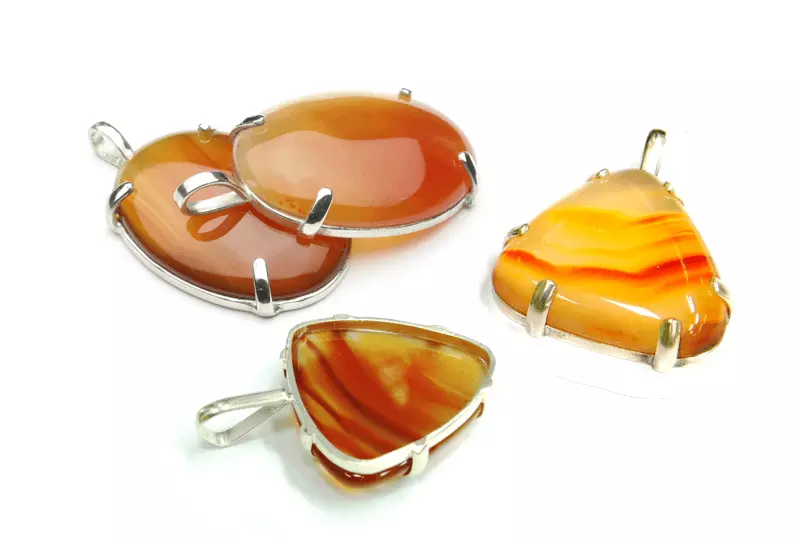
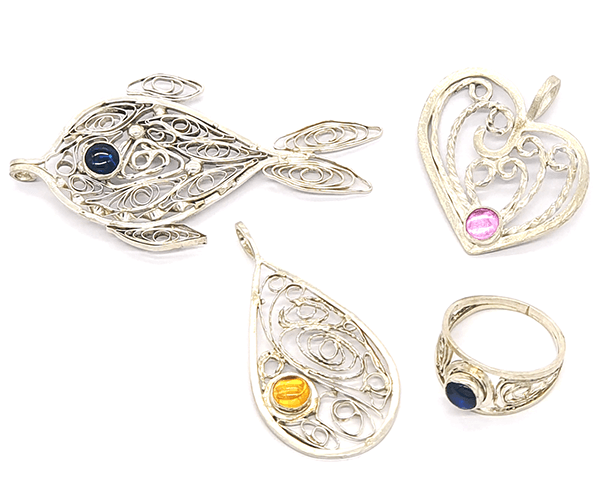
Pedestal prong setting for cabochon gems
Create jewellery settings from raw materials to manufacture secure, multi-pronged settings for cabochon gems of any shape or size. Starting with round wire, roll it evenly flat and shape it to precisely fit the contour of the gem. With the leftover wire rolled to ½ round create the bail and prongs. Solder all parts onto the frame symmetrically, polish to a high shine before setting the gem with the new tools provided in the kit.

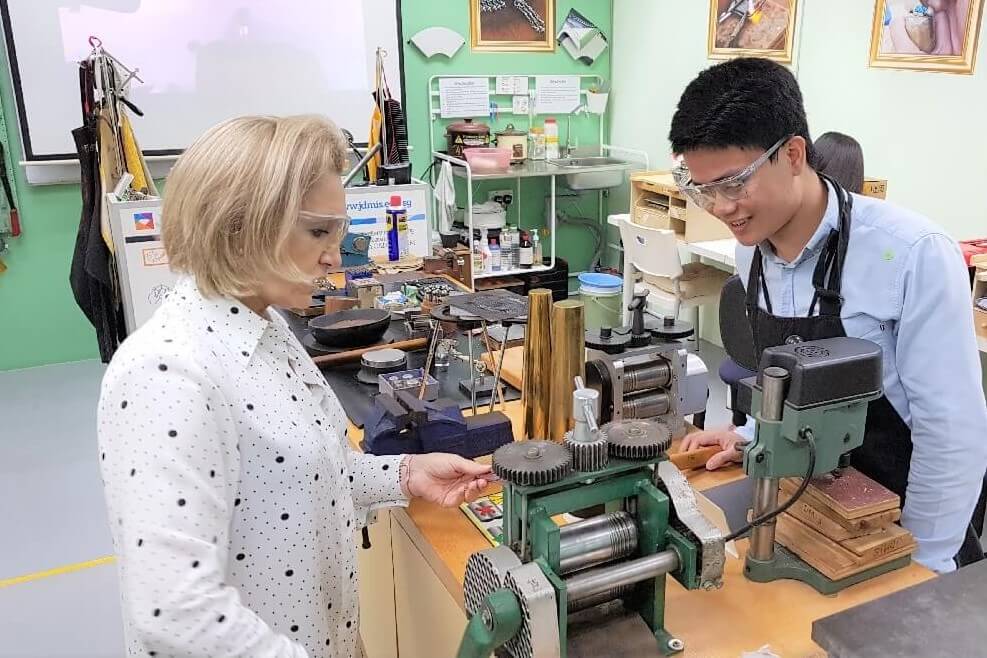
Rolling mill techniques and Roll Printing
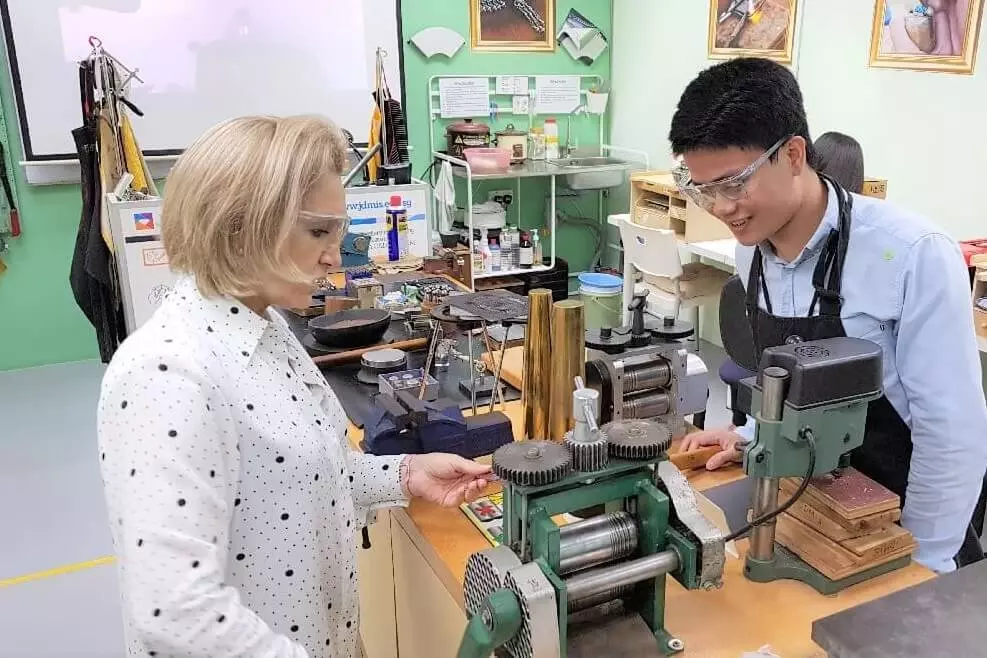
Explore methods for transforming round wire into specialized wire profiles that suit unique design requirements for prongs and bails and discover roll printing a technique where textured materials - such as fabric, paper, or organic items - are passed through a rolling mill with sheet metal to imprint patterns adding texture and enhancing contrast. These skills allow jewellers to create bespoke components and unique designs that elevate the originality of their work.
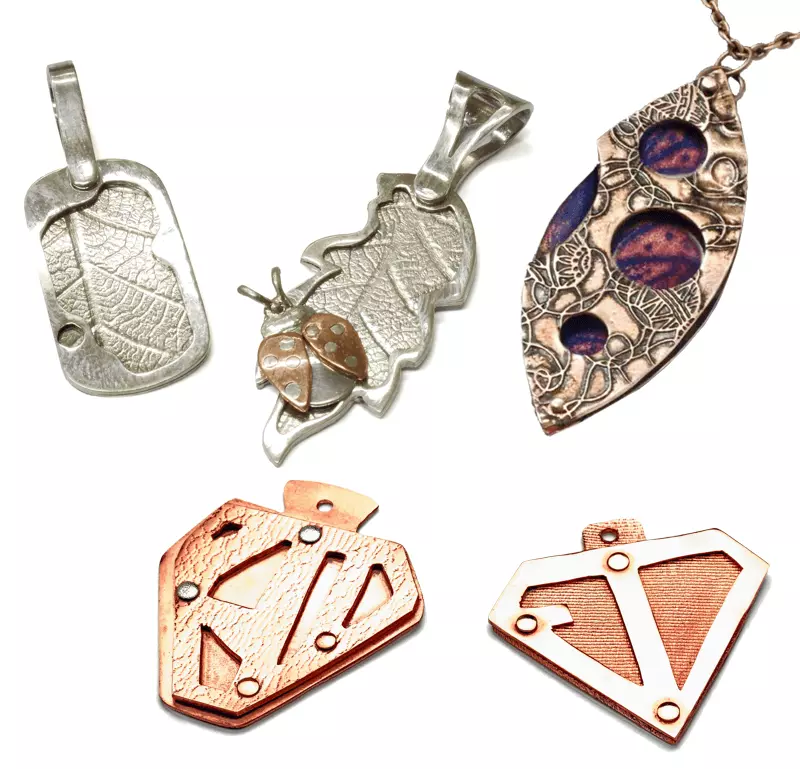
Cold connections, rivets, eyelets and creative cold joining options
Master techniques for joining metal parts without heat, enabling the creation of movable or mixed-material designs. These approaches are essential for complex jewellery pieces where soldering is impractical. Brass and copper rivets and eyelets are provided in various lengths and wire is used to produce invisible connections which give the illusion of a soldered join.
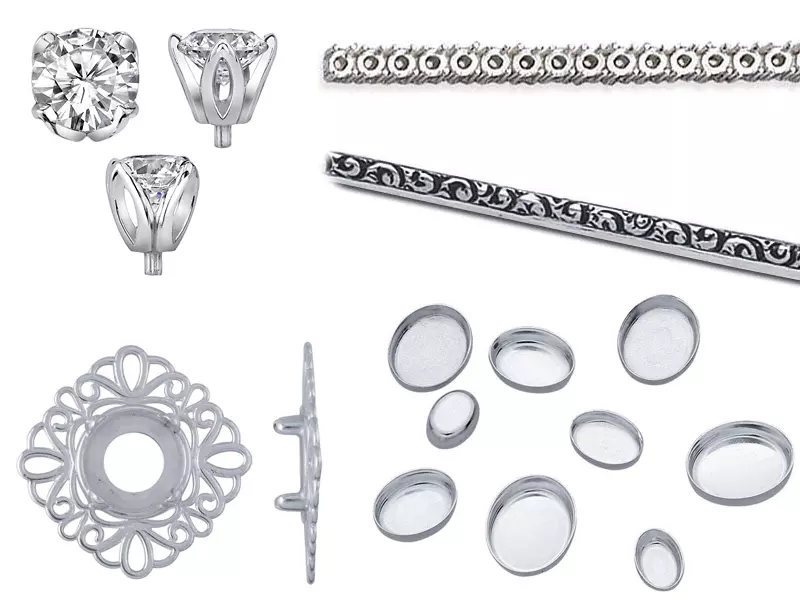
Working with pre-made Bezel and Prong settings
Understand how to integrate commercial components into custom designs while maintaining craftsmanship quality. This knowledge helps jewellers save time without compromising on durability or aesthetics and gives a competitive edge in today’s challenging market. By learning to work with standard components, jewellers can offer clients faster turnaround times and cost-effective solutions without sacrificing originality or value.
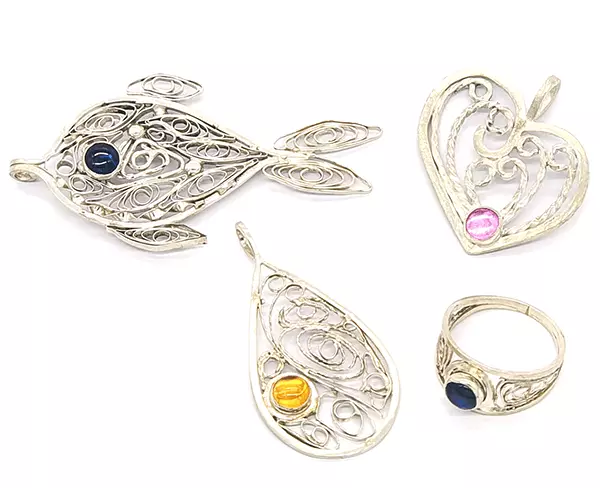
Basic Filigree Techniques – Art of the ancient Greeks
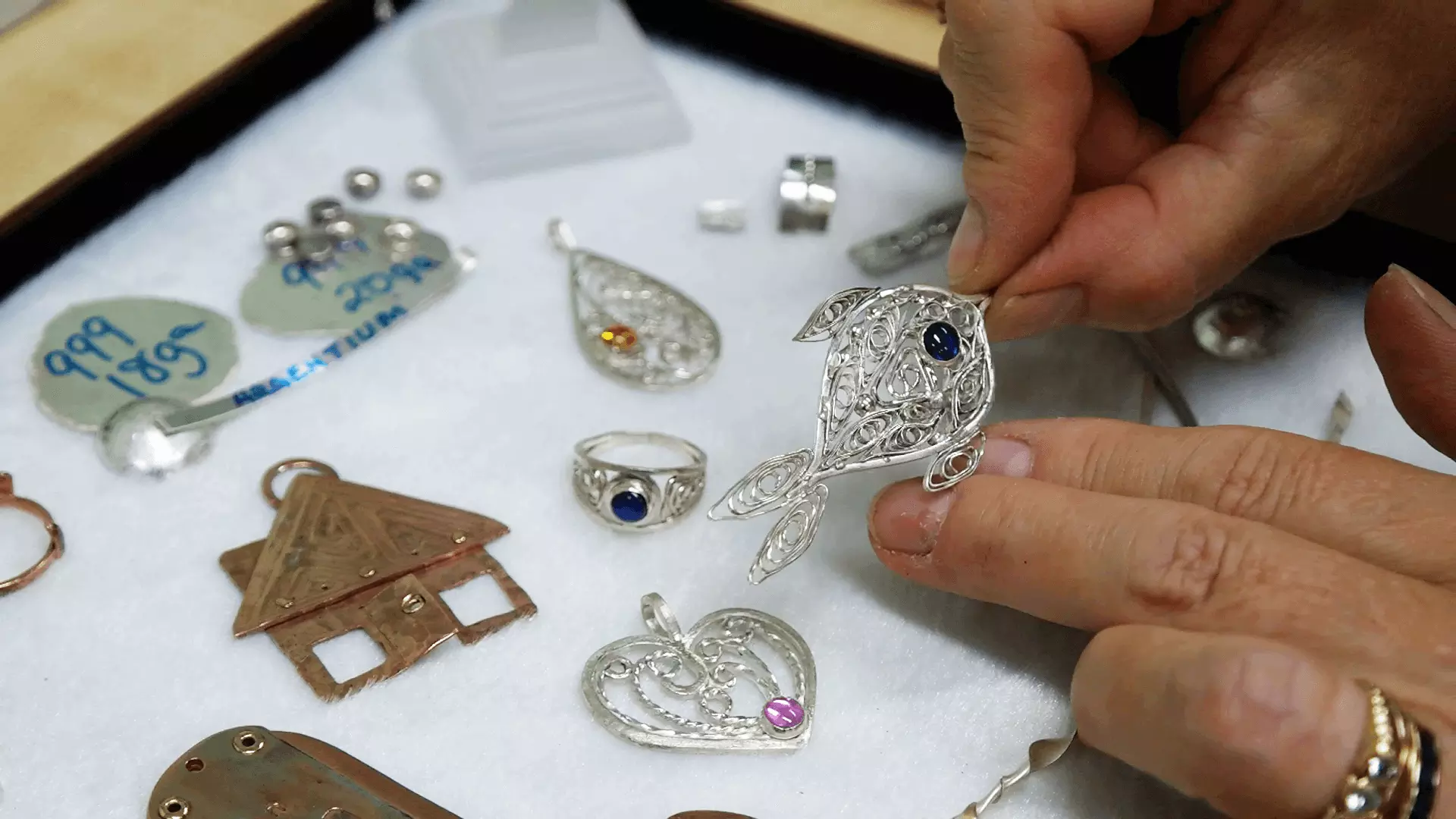
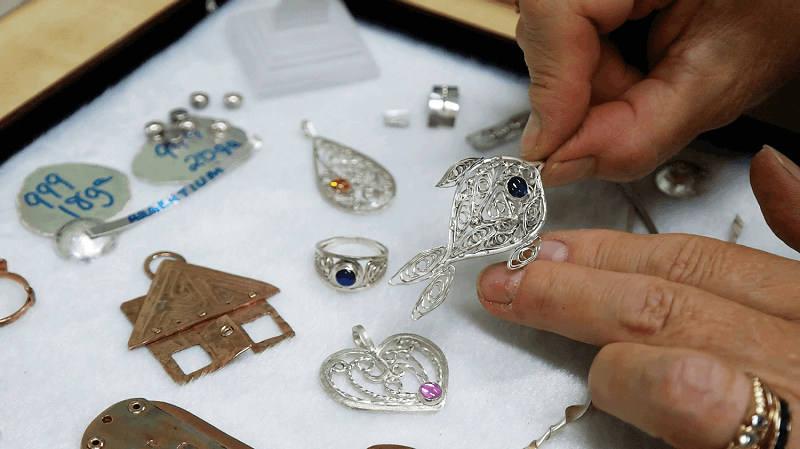
Learn to twist, shape, and solder delicate wires to form intricate ornamental patterns. Filigree work demands patience and precision, making it a hallmark of advanced jewellery artistry. This technique not only enhances the visual appeal of a piece but also reflects the jeweller’s mastery of fine craftsmanship and historical design traditions.
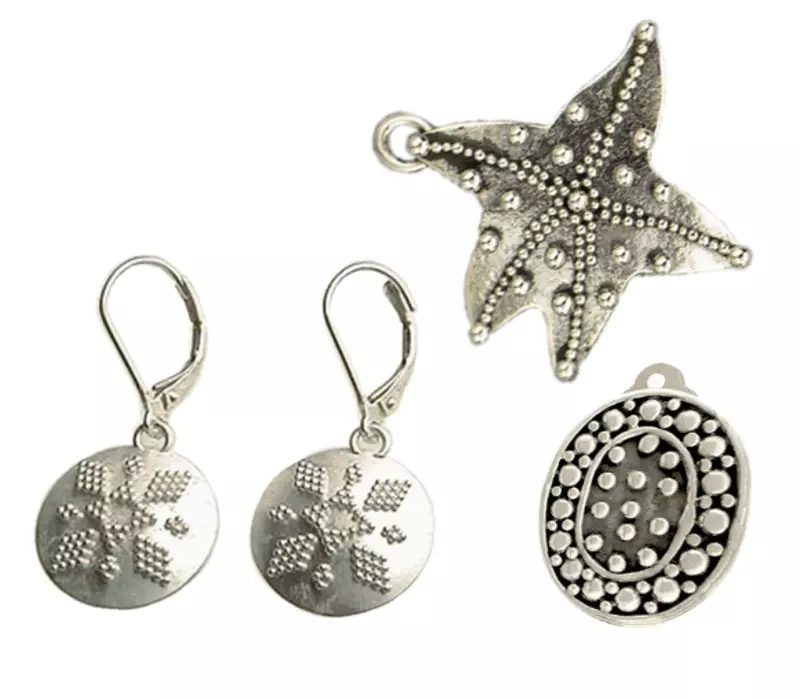
Basic Granulation – Working with Argentium
Learn about the benefits of Argentium when using this technique. Discover how to create and fuse tiny metal spheres for decorative effects that enhance jewellery designs. Consistency in size and placement is key to achieving professional-quality granulation. Mastering granulation requires precise heat control and meticulous surface preparation, as even minor errors can prevent proper fusing.
Duration & Training Modes

Duration: 3-5 weeks
Mode: Blended or E-Learning
All important theory and practical demonstrations will now be delivered through asynchronous (self-paced) online learning. This means that students go through most of the learning at their own pace and convenience via a comprehensive series of online videos and attend live interaction sessions (physical or online) afterwards to receive maximum support and guidance under expert instructors to reinforce the learning of key skills and concepts. For more information on different training modes, click here .
JDMIS also has flexible make-up schedules and graduates can return for free for refresher courses (subjected to availability).
Student Reviews
-

Metalsmithing 200 is great fun... Yes, this is the best place to learn from and Tanja is a fabulous teacher!
- Shuk Weng K. (Singapore)
-
My favourite course is MS200 because it’s finally coming together and you can apply the knowledge gained in MS100 to more interesting projects. Very satisfying to make own pieces despite the challenges.
- Geraldine W. (Singapore)
-
Metalsmithing was my favorite, followed by gem education. I loved the detail and metal work involved in Metalsmithing, and that I now feel equipped to create anything I see! And, there are quick and easy projects that can be made for fun too.
- Laura C. (United States)
-
I really enjoyed MS200 as it really built upon the MS100 basics , but allowed for more individual creativity in the designs
- Saher L. (Pakistan)

Instructor's profile
-

Tanja Sadow
Tanja is an award winning jewellery designer & gemmologist with more than 4 decades of experience educating the jewellery industry across 4 continents. Dean and founder of JDMIS, Tanja works with aspiring artisans as well as top jewellery brand team members to help them achieve brilliance in their careers. Read More

- 1
-
Learning path

Create
This course offers a practical hands-on experience. At the end of the workshop, participants will have produced one or more pieces of jewellery.
Prerequisites:
MS100 - Traditional Metalsmithing 1: Foundation Metalwork Skills and ExperienceNext Steps (Powder Metallurgy Specialisation):
MS300 - Traditional Metalsmithing 3: Metalsmithing with Intermediate Stone settingsNext Steps (Complementary Metal Arts Specialisation):
NM100 - New Metal Technology 1: Creative Silver Modelling TechniquesNext Steps (Jeweller's Knowledge):
GT100 - Jewellery Trade Practices 1: Gem and Jewellery Trade Secrets and/or
FT100 - Jewellery Fashion Trends 1: Epic and Contemporary TrendsParticipants attending and completing this programme as a stand-alone certification can choose to enroll for the Precious Metal Arts Diploma.
-
Tools and materials

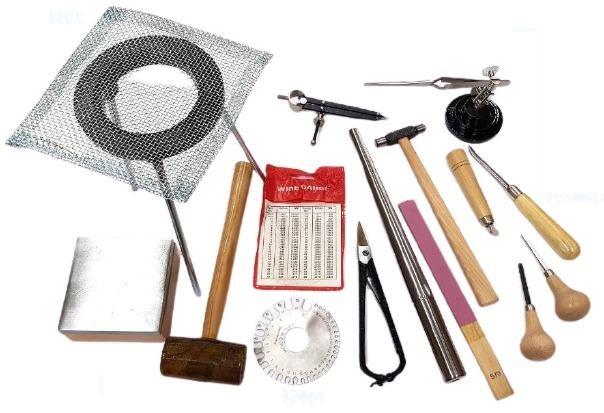
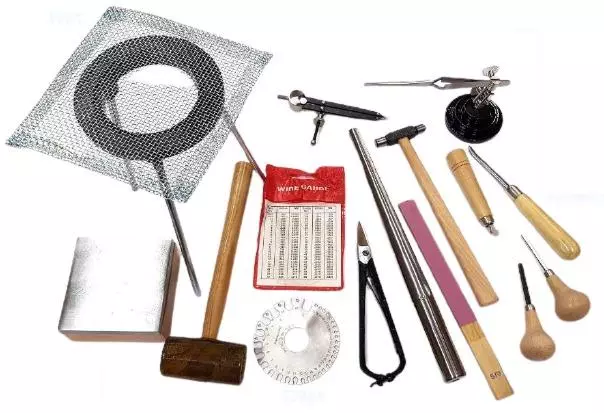
Like all JDMIS courses, students receive everything they need to complete all their coursework. This course includes all the tools and reference material needed in order to immediately start producing jewellery.
Having already completed MS100, you have your own jewellery workbench and basic tools. In this module you receive more valuable intermediate tools needed by the professional jeweller.

- 1
Course Fee:
Invest in Your Creative Future
One payment. Lifetime access. No recurring fees.
Private Atelier Experience
30 hours exclusive in-studio training with Master Trainers
Available for corporate groups & private cohorts (min. 6 participants)
Self-Paced Essentials
Learn at your own pace
Guided Certification
Get certified with expert feedback
Classroom Immersive
Global Live Interactive
Maximum transformation
Add the Professional Toolkit
Everything you need to complete every project
Why Lifetime Access Changes Everything
See how different learning models compare
Monthly Subscriptions
Pay monthly to access. Stop paying = lose everything. Want to revisit in 2 years? Subscribe again.
Traditional Schools
Show up, hope you learn, go home. No recordings, no second chances. Miss a class? Miss it forever.
JDMIS Lifetime Access
Pay once, own forever. Revisit any module, any time, for life. Your content never expires.


Course Gallery
Frequently asked questions — Intermediate Techniques & Stone Setting (MS200)
What will I learn in Metalsmithing 2?
MS200 advances from basic sawing to complex fabrication such as sweat soldering and forming hollow forms, and introduces stone setting with professional bezel settings for cabochons.
Do I need my own tools and materials?
No — all specialized tools and precious materials are provided in-studio so you can focus entirely on mastering the intermediate techniques.
What will I make?
You complete three sophisticated jewellery projects during the 30-hour course, building a professional-grade portfolio.
Why does stone setting matter so much?
Mastering stone setting is the point where a hobbyist becomes a professional jeweller — the core skill the Metalsmithing ladder builds toward, continuing toward the Precious Metal Arts diploma.
 Free refresher classes and industry events!