
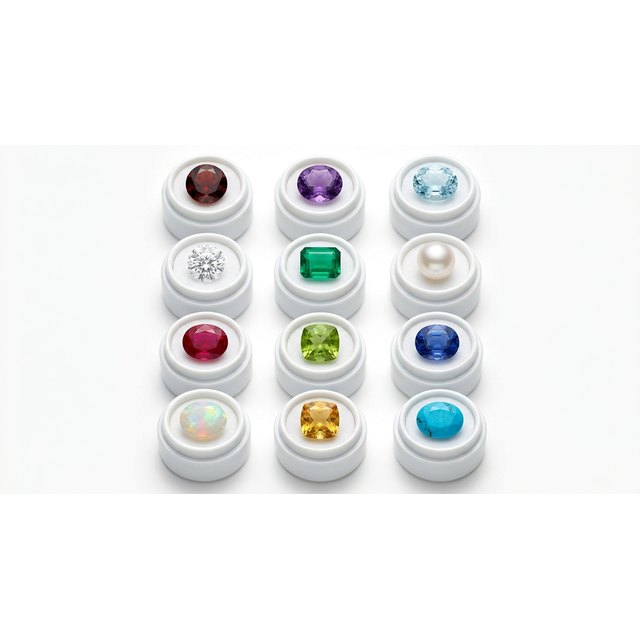
The birthstone tradition links one gem to each month, wearing “your” stone supposedly bringing luck or health. The modern list most jewellers use was standardised in 1912 by the American National Association of Jewelers and has been adjusted a few times since — which is why you will sometimes meet two stones competing for one month.
The modern list
January garnet · February amethyst · March aquamarine (bloodstone traditionally) · April diamond · May emerald · June pearl, moonstone or alexandrite · July ruby · August peridot (spinel added later) · September sapphire · October opal or tourmaline · November topaz or citrine · December turquoise, zircon or tanzanite.
Where it came from
The chain runs from the twelve stones of the High Priest’s breastplate in the Book of Exodus, through medieval associations of stones with months and zodiac signs, into Victorian sentimental jewellery and finally the trade standardisation of 1912. That history is why the list mixes precious gems (diamond, ruby, sapphire, emerald) with organics (pearl) and semi-precious material (garnet, amethyst) — it was never ranked by value.
Why jewellers like it
Birthstones give customers a personal, low-anxiety entry into gem buying: the choice is made for you, every budget has an option, and the gift story writes itself. The materials themselves — pearls, opals, the coloured stones — are covered in the gem-trade curriculum at JDMIS; see the gem and jewellery trade programme or browse the jewellery blog for individual stone stories.
Frequently asked questions
What is the modern birthstone list?
January garnet, February amethyst, March aquamarine, April diamond, May emerald, June pearl or moonstone or alexandrite, July ruby, August peridot, September sapphire, October opal or tourmaline, November topaz or citrine, December turquoise, zircon or tanzanite.
Where does the birthstone tradition come from?
The chain runs from the twelve stones of the High Priest's breastplate in the Book of Exodus, through medieval associations of stones with months and zodiac signs, into Victorian sentimental jewellery, ending in the trade standardisation of 1912 by the American National Association of Jewelers.
Why do some months have two or three birthstones?
Because the 1912 list has been adjusted several times since, and some months kept both the traditional and the added stone - March kept bloodstone alongside aquamarine, August gained spinel, and December carries turquoise, zircon and tanzanite.