

A half-finished silver ring with jeweller's saw, file and torch on a bench block

A design only becomes jewellery through a manufacturing process, and each process shapes what the design can be. The main families are hand fabrication, lost-wax casting, stamping and die-striking, and — increasingly — digital modelling with rapid prototyping.

Fabrication

Fabrication means building a piece directly in metal: sawing, filing, forming and soldering sheet and wire. It suits one-off work and designs that must be exact. It is labour-intensive — most of a fabricated piece’s price is the maker’s time. The bench skills involved are the core of the JDMIS metalsmithing programme.

Casting

Lost-wax casting starts from a wax model — carved by hand, or grown from a digital file. The wax is surrounded by investment, burned out, and molten metal fills the cavity. Casting suits complex, sculptural forms and repeat production; finishing and stone setting follow. A designer who understands casting designs walls, sprue points and tolerances that the process can actually deliver.

Stamping and digital

Stamping and die-striking press shapes from sheet at production scale — the world of chains, blanks and mass-produced mountings. Digital design closes the loop: a model built in CAD can be prototyped in resin and cast directly, which is why design training and CAD skills now reinforce each other in the trade.

Why designers must know this

Knowing the techniques keeps designs practical and priced honestly — the reason manufacturing overview sits inside the JDMIS design curriculum from the start.

Frequently asked questions

What are the main ways jewellery is made?

Four families: hand fabrication (sawing, filing, forming and soldering sheet and wire), lost-wax casting (from a hand-carved or digitally grown wax model), stamping and die-striking at production scale, and digital modelling with rapid prototyping.

Why is fabricated jewellery expensive?

Because fabrication builds a piece directly in metal with hand processes, it is labour-intensive - most of a fabricated piece's price is the maker's time. It suits one-off work and designs that must be exact.

How does lost-wax casting work?

A wax model is surrounded by investment, the wax is burned out, and molten metal fills the cavity. Casting suits complex sculptural forms and repeat production; a designer who understands it designs walls, sprue points and tolerances the process can deliver.

Keep exploring: Types of Jewellery: A Working Guide for Designers · Design Principles: How Elements Become Jewellery

Explore further: find your Artisan Archetype in JDMIS’s visual quiz, or book a visit to the school.

A precise technical drawing of ring views with construction and centre lines

In any jewellery drawing, a handful of lines carry most of the information: the silhouette, the centre line, the line where a shoulder meets a head, the girdle line of the stone. These are the critical lines. Everything else — shading, texture, decoration — is secondary to getting them right.

Why they are critical

Critical lines are the lines shared between views. The width of a ring in the top view must equal its width in the side view; the stone’s diameter is the same in every drawing of the piece. If a critical line disagrees between views, the drawing cannot be made as shown, and a maker will either guess or return it. Training designers to find and control these lines first is what makes technical jewellery drawing reliable.

Symmetry and guidelines

Most jewellery is symmetric, so guidelines — centre lines, axis lines, construction circles — do quiet work keeping both halves of a design identical. Professional drawings keep these guide marks disciplined: light where they are construction, dark where they are final form.

Where this is taught

Line control, guidelines and view consistency are drilled from the first weeks of the JD100 design foundation course at JDMIS and carried into advanced jewellery illustration. For the wider design toolkit, see the JDMIS jewellery blog.

The two guidelines that carry symmetry

Two template-drawn guidelines do most of the work when a design must be symmetrical: the 90-degree cross and the 45-degree diagonal pair. The 90 guideline is drawn with the triangle template in horizontal and then vertical position, one line resting on the other. For the 45s, a second template is laid at 45 degrees as a ramp: the triangle rides up it, drawing the horizontal until the vertical edge crosses, then the vertical — completing the cross. Rotating the triangle anticlockwise onto the ramp at the two diagonal positions draws both 45-degree lines through the centre of the 90.

The practice regime is ten of each: ten 90-degree guidelines on a sheet, then ten 90s with intersecting 45s — always with the mechanical pencil and 2H lead for accuracy, timed, fast but precise. The 90-and-45 pair is what keeps gems and symmetrical objects accurate; everything else in the drawing refers back to them.

Frequently asked questions

What are critical lines in a jewellery drawing?

The handful of lines that carry most of the information: the silhouette, the centre line, the line where a shoulder meets a head, and the girdle line of the stone. Everything else - shading, texture, decoration - is secondary to getting these right.

Why do critical lines have to match between views?

Critical lines are shared between views: a ring's width in the top view must equal its width in the side view. If they disagree, the drawing cannot be made as shown and a maker will either guess or return it.

What do guidelines do in jewellery drawing?

Most jewellery is symmetric, so centre lines, axis lines and construction circles quietly keep both halves of a design identical. Professional drawings keep guide marks light where they are construction and dark where they are final form.

Explore further: find your Artisan Archetype in JDMIS’s visual quiz, or get an AI-guided course consultation.

Sapphire crystals in a crucible beside cut blue sapphires and tongs, illustrating gemstone heat treatment

Two sapphires can look identical in a shop window while differing thousands of dollars in value, and the difference often comes down to one word on the certificate: treated. A gemstone treatment is any human process applied to a stone to improve its colour or clarity. Treatments are legal and widespread — the trade issue is disclosure, because a treated stone is worth less than an untreated one that looks the same.

Why gems are treated at all

Natural gems form under geological conditions that rarely produce perfect colour and clarity together. Rough material that would otherwise be uncommercial can be improved dramatically with the right process, so the trade developed treatments over centuries — heat treatment of sapphires, for instance, goes back to antiquity. Understanding treatments is part of understanding gem value: the same variety, size and appearance can span a wide price range depending on what has been done to the stone.

The common treatment families

Heat treatment is the most common, applied routinely to sapphires and rubies to improve colour. Irradiation uses radiation to alter colour, as in many blue topaz. Diffusion introduces colouring elements into the surface layer of a stone only. Fracture filling injects a glass-like substance into surface-reaching cracks, most famously in rubies, improving apparent clarity. Dyeing adds colour to porous material such as some jade, turquoise and quartz. Oiling of emeralds is so customary that untreated emeralds are the exception. Each family has a different degree of permanence — and a different effect on value.

How treatments are detected

Detection is microscope work. Filled fractures show flash effects and gas bubbles; diffusion shows colour concentrated at facet junctions; heated stones can show altered inclusions. A spectrometer can reveal the chemical fingerprints of some treatments, and laboratories grade and disclose them on reports. This is why professional identification equipment matters: a treatment visible under a microscope is invisible to the naked eye.

Why the trade cares so much

Disclosure rules in the gem trade exist because treatments are easy to hide and expensive to discover. A buyer who understands treatments asks the right questions, reads certificates properly, and prices stones correctly — whether buying a sapphire, jade or a strand of pearls. This is core trade knowledge rather than laboratory science: it changes what you pay and what you can honestly resell.

Learning treatments properly

At JDMIS, treatments are covered inside GT100 Gem & Jewellery Trade Secrets, which teaches gem materials, imitations, synthetics and the treatments used across the industry, with stones in hand — the course kit includes a jeweller’s loupe and reference materials so you can examine examples yourself. The gem-value modules cover how colour, clarity and treatment status translate into price differences you will actually meet in the market.

Frequently asked questions

What is a gemstone treatment?

Any human process applied to a stone to improve its colour or clarity - heat treatment, irradiation, diffusion, fracture filling, dyeing or oiling. Treatments are legal and widespread; the trade issue is disclosure, because a treated stone is worth less than an untreated one that looks the same.

Is heat treatment common in sapphires?

Yes - heat treatment to improve colour is applied routinely to sapphires and rubies and goes back to antiquity. Oiling of emeralds is similarly customary, to the point that untreated emeralds are the exception.

How are gemstone treatments detected?

By microscope work: filled fractures show flash effects and gas bubbles, diffusion concentrates colour at facet junctions, and heated stones can show altered inclusions. Laboratories grade and disclose treatments on reports - they are invisible to the naked eye.

Explore further: play Name That Gem, a free gem-identification game, or trace gems to their sources on the Gem Globe.

A jeweller's loupe, tweezers and loose coloured gemstones arranged for gem identification

You have a stone at home and want to know what it is. Colour alone will not tell you: the same gem variety comes in many colours, and different gems can look identical to the eye. Professional gemmologists identify stones by testing measurable properties — refractive index, specific gravity, optical character — and eliminating every possibility that does not match. That elimination process is what actually identifies a gem, and while most of it needs laboratory equipment, the first steps can be done carefully at home.

Start with careful observation

Before any tool, gather what your eyes can tell you. Examine the stone in daylight and under a lamp: note the hue, the tone (light to dark), and how evenly the colour is distributed. Look at the cut: is it faceted, cabochon, or carved? Check for chips and wear on the facets — glass imitations scratch and abrade more easily than most crystalline gems. Write everything down; you are building a description to eliminate candidates against a reference list.

Use a 10x loupe

The 10x loupe is the international standard for gem grading, and it is the one professional tool that is genuinely practical to own. Under magnification, look for inclusions — internal features such as crystals, fractures, or growth lines. Inclusions can separate natural gems from their man-made counterparts, and certain inclusions point to specific gem families. A stone that is completely flawless under 10x is itself a signal: either rare, synthetic, or glass.

Run honest home checks

A few non-destructive checks are worth doing. Feel the stone: crystalline gems conduct heat quickly and feel cool to the touch, while plastic and glass feel warmer. If the stone is unset, a simple float test in water tells you whether it floats (amber, some plastics) or sinks (nearly all crystalline gems). What you should not do is scratch, heat, or acid-test a stone — home hardness tests and flame tests can cause irreparable damage, and the internet is rife with such ineffective or bogus methods.

Know where home identification ends

Looks-like elimination and loupe work can narrow the field, but confirming an identity requires measuring properties. A refractometer reading, polariscope behaviour, and specific gravity liquid will conclusively rule candidates in or out — and separating treated from untreated material, or natural from synthetic, generally needs a microscope and spectrometer. At that point the honest options are a gemmological laboratory or learning to use the equipment yourself.

Learning to identify gems properly

Identification is a learnable skill, not a trade secret. At JDMIS the GT100 Gem & Jewellery Trade Secrets course covers gem materials, imitations, synthetics and treatments, and the follow-on GT200 Gem Identification Methods course teaches hands-on lab techniques — loupe work, refractometer, polariscope and spectroscopy — on real stones. For most people, one look through a properly set refractometer explains why the internet’s one-minute tests never quite work.

Where to go deeper

setting a stone once you know what it is · natural vs synthetic diamonds.

Frequently asked questions

Can you identify a gemstone by its colour?

No. The same gem variety comes in many colours and different gems can look identical to the eye. Professionals identify stones by testing measurable properties - refractive index, specific gravity, optical character - and eliminating every possibility that does not match.

What can a 10x loupe tell you about a stone?

Under 10x magnification you can look for inclusions such as crystals, fractures and growth lines, which can separate natural gems from man-made counterparts. A stone completely flawless under 10x is itself a signal: either rare, synthetic, or glass.

Are home hardness and flame tests safe for gemstones?

No. Scratching, heating or acid-testing a stone can cause irreparable damage. Safe non-destructive checks include the heat-conductivity feel test and, for unset stones, a water float test.

Explore further: play Name That Gem, a free gem-identification game, or trace gems to their sources on the Gem Globe.

Visual reference

Home gemstone identification: the loupe, light and reference chart from the practical guide

Try it with a real stone: the JDMIS gem identification tool walks the measurable tests (RI, SG, optic character) with you; the professional toolset behind them is in the eight tools gemmologists use.

Related reading

Picture of jewellery design graduate Yasuyo
Portrait of JDMIS Director Alex

Have you ever wondered what it's like to have a career in jewellery design? Hi, I'm Alex Zupancich, JDMIS' Director and Digital Jewellery Design instructor at JDMIS. As someone who has transitioned from the high-paced I.T. industry to the enchanting world of jewellery, I can tell you firsthand—it's a journey worth taking. Let me share with you the reasons why joining the field of jewellery design can be one of the most rewarding decisions you'll ever make.

You can watch my 6-minute video presentation or if you prefer to read, you can continue with the article below instead:


Picture of a jewellery sketching inspired by birds

Autonomy and Creativity

As a jewellery designer, I've found an unprecedented level of autonomy and creativity. This isn't just a job; it's a passion that allows us to connect deeply with our clients and work. The satisfaction of generating happiness through my designs, while also being valued for my multi-disciplinary skills within my organization, is indescribable.

Picture of a stunning digitally designed jewellery with 3 large pink gems

The Thriving Jewellery Industry

The global jewellery market is booming, expected to grow from about 271 billion U.S. dollars to an astonishing 650 billion dollars by 2035. In Singapore alone, this industry contributed a remarkable 3 billion dollars to the Retail GDP in 2019, making it a lucrative field with great potential for professional growth.

Picture of a bride and groom happy and wearing stunning jewellery

A Happy Industry

Jewellery design is undeniably a happy industry. We don't just create products; we craft experiences and memories. Celebrating life's milestones with bespoke pieces that clients will treasure forever gives a profound sense of fulfillment that's hard to find in any other profession.

Picture of a woman happily sketch jewellery design on paper

Mastering Timeless Skills and Modern Technology

Did you know that the first pieces of jewellery date back to 3000 BC? While the industry honors its rich heritage, it also embraces modern technology. As a jewellery designer, I leverage tools like computer-aided design and manufacturing to bring my visions to life in ways that were once unimaginable.

Beginner-Friendly Career Path

Don't let a lack of artistic background deter you. Jewellery design, much like any skill, can be learned and perfected over time. With dedication and practice, anyone can become adept at expressing creativity through stunning jewellery pieces.
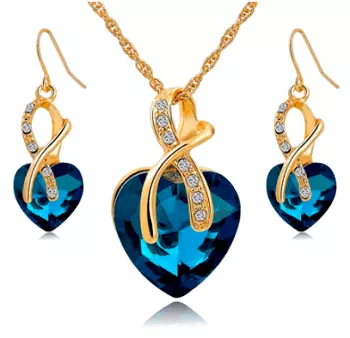
Picture of a stunning digitally design blue heart-shaped pendant

Plenty of Room for Growth

The role of a jewellery designer is not confined to the design table. There's immense potential for entrepreneurship. From starting your own brand to crafting unique pieces for a niche market, the possibilities are endless. And with JDMIS, you're equipped with both design and gemmological knowledge to excel in your endeavors.

How to Get Started

Are you ready to begin your adventure in professional jewellery design? The Jewellery Design and Management International School (JDMIS) is your premier destination for comprehensive jewellery education. Our exclusive curriculum includes certifications, diplomas, and pathways to prestigious UK university degrees.
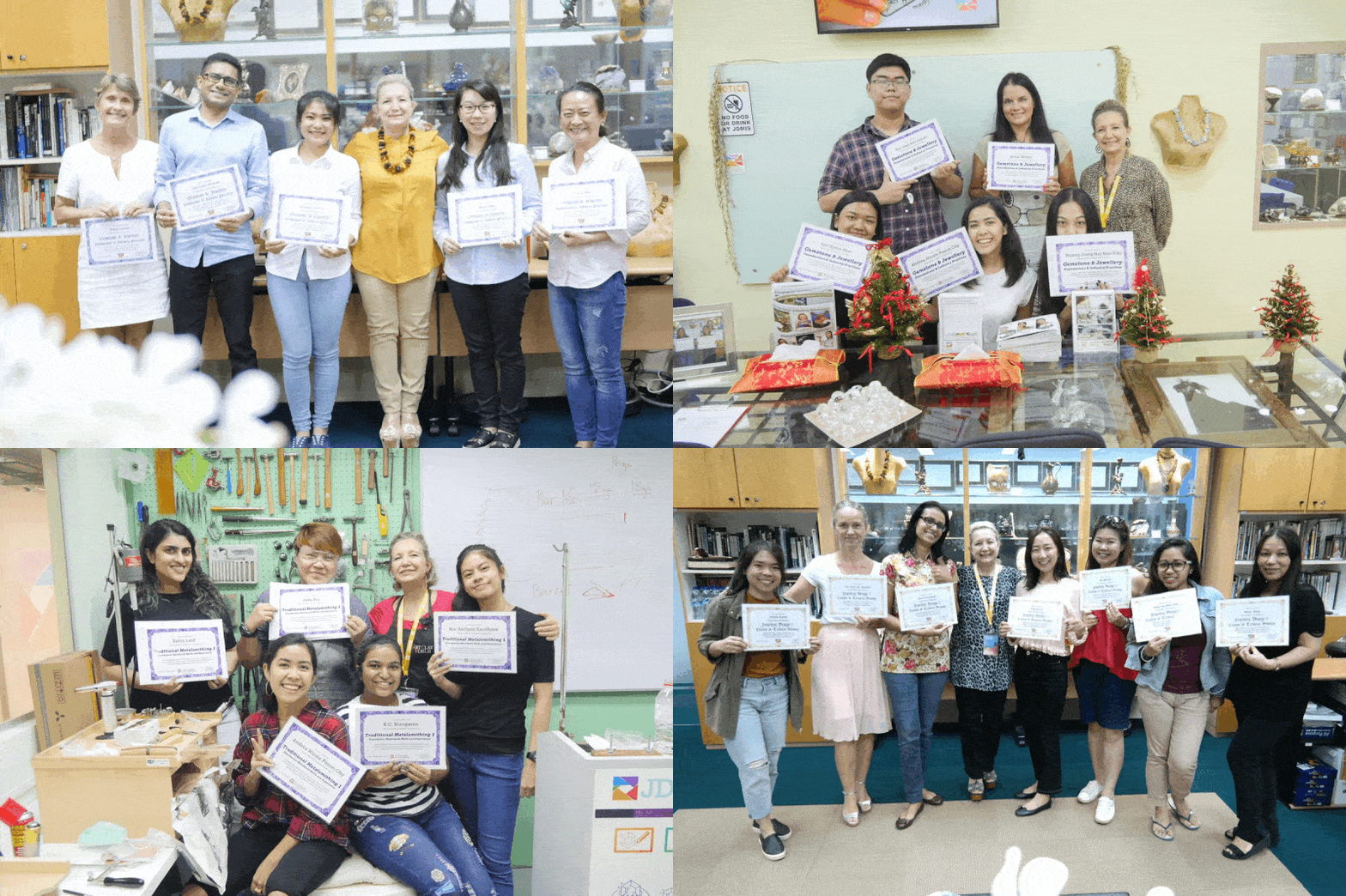
Collaged images of student groups in various jewellery classes at JDMIS

Since 1987, JDMIS has been at the forefront of training Singapore's jewelers and artisans. With our unique approach to education, you'll gain invaluable skills and knowledge. Just ask our successful graduates, like Cathy Que Liping and Kajal Naina, whose journeys from gaming and dentistry to award-winning jewellery designers are nothing short of inspiring.

Your Creative Journey Awaits

Eager to harness your creativity in a career that offers joy, personal growth, and a touch of sparkle? Enroll in JDMIS' Fine Jewellery Design Certificate course today and begin crafting your future, one exquisite piece at a time. If you are more inclined towards working with computers and software, you can also consider JDMIS' highly popular Digital Jewellery Design Certificate course as well.

Alex Zupancich
Director of the Jewellery Design and Management International School

Frequently asked questions

How big is the jewellery industry?

The global jewellery market is expected to grow from about 271 billion US dollars to around 650 billion dollars by 2035; in Singapore the industry contributed about 3 billion dollars to retail GDP in 2019.

Why do people pivot into jewellery careers?

For autonomy and creativity, a thriving industry, and the satisfaction of a trade that celebrates life's milestones - reasons JDMIS' Director shares from his own transition from the IT industry to jewellery design.

Explore further: find your Artisan Archetype in JDMIS’s visual quiz, or book a visit to the school.

Troubleshooting Information:
NON SEF URL:
Printable: